
 Healthcare Professionals


How antiperspirants work
Antiperspirants reduce wetness using a form of aluminum, listed first on the product’s label. The aluminum compound dissolves in sweat, enters the sweat ducts, and forms temporary gel “plugs” that block sweat from reaching the surface of the skin. Depending on the formula, those plugs can last a day, several days, or longer before you reapply. The same compounds also help curb odor by limiting the bacteria that feed on sweat.
Two habits help any antiperspirant work better: apply it to completely dry skin, and apply it at night. On wet skin the product slides off instead of settling into the sweat ducts; at night you sweat less, so it has roughly eight hours to do its job. (For more, see our sweat FAQs.)
The 18 FDA-approved aluminum salts
Aluminum salts have been used to control sweat for more than 80 years. They can look intimidating on a label, but aluminum is the third most common element on Earth and occurs naturally in soil, water and many foods. The U.S. Food and Drug Administration (FDA) has approved 18 different aluminum salts for use in over-the-counter (OTC) antiperspirants — which is the real reason the ingredient list can be so confusing. Here is the full FDA list, with the maximum concentration allowed for each:
- Aluminum chloride up to 15 percent, calculated on the hexahydrate form, in an aqueous solution nonaerosol dosage form
- Aluminum chlorohydrate up to 25 percent
- Aluminum chlorohydrex polyethylene glycol up to 25 percent
- Aluminum chlorohydrex propylene glycol up to 25 percent
- Aluminum dichlorohydrate up to 25 percent
- Aluminum dichlorohydrex polyethylene glycol up to 25 percent
- Aluminum dichlorohydrex propylene glycol up to 25 percent
- Aluminum sesquichlorohydrate up to 25 percent
- Aluminum sesquichlorohydrex polyethylene glycol up to 25 percent
- Aluminum sesquichlorohydrex propylene glycol up to 25 percent
- Aluminum zirconium octachlorohydrate up to 20 percent
- Aluminum zirconium octachlorohydrex gly up to 20 percent
- Aluminum zirconium pentachlorohydrate up to 20 percent
- Aluminum zirconium pentachlorohydrex gly up to 20 percent
- Aluminum zirconium tetrachlorohydrate up to 20 percent
- Aluminum zirconium tetrachlorohydrex gly up to 20 percent
- Aluminum zirconium trichlorohydrate up to 20 percent
- Aluminum zirconium trichlorohydrex gly up to 20 percent
The FDA also limits what a label can claim, based on measured sweat reduction. To be called an antiperspirant at all, a product must reduce sweat by at least 20 percent. Products proven to cut sweat 20 percent over 24 hours may say “all day” or “24-hour protection”; those proven at 30 percent may say “extra effective.”
The 4 aluminum actives that actually matter
Most of those 18 salts are variations on four ingredients you’ll actually see in leading antiperspirants. Here is what each one is, what it does best, and which Certain Dri product uses it.
What is aluminum chloride?
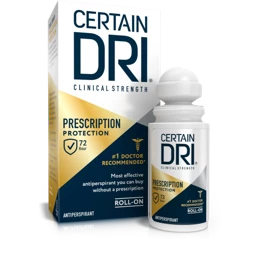
Aluminum chloride is the strongest OTC antiperspirant active. It is a small, simple inorganic salt, so it penetrates the sweat ducts more deeply than larger aluminum complexes and reduces sweat at a deeper level. That makes it the preferred choice for heavy or excessive sweating. Certain Dri Prescription Strength uses 15% aluminum chloride — the FDA maximum for that ingredient.
What is aluminum sesquichlorohydrate?
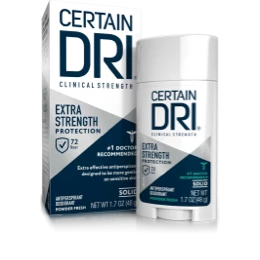
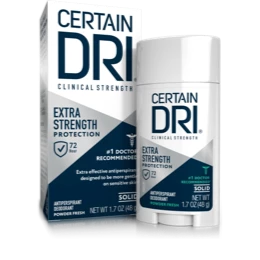
Aluminum sesquichlorohydrate is a poly-aluminum complex that is strong yet gentle. It forms relatively large molecules that create longer-lasting plugs — protection that can last for days — while being easier on sensitive skin than aluminum chloride. It is the active in Certain Dri Extra Strength Clinical.
What is aluminum chlorohydrate?
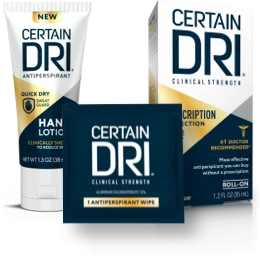
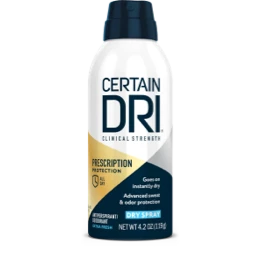
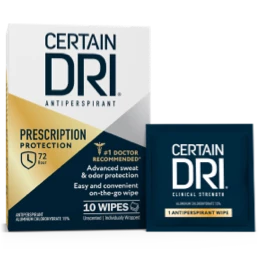
Aluminum chlorohydrate is a common everyday antiperspirant active. It is another poly-aluminum complex, gentler than aluminum chloride and well suited to daily freshness and convenient formats. Certain Dri uses it in antiperspirant wipes and dry spray.
What is aluminum zirconium tetrachlorohydrex gly?
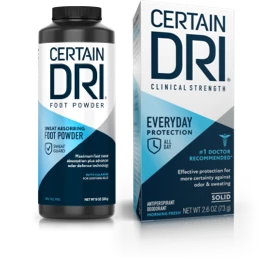
Aluminum-zirconium salts are partially neutralized actives built for all-day, low-irritation wear. Because they produce less acid on the skin — the main cause of antiperspirant sting — they suit sensitive skin, and their plugs sit more superficially in the duct. “Tetrachlorohydrex gly” and “trichlorohydrex gly” are closely related members of this family; Certain Dri Everyday Strength Clinical uses aluminum zirconium trichlorohydrex gly at 20%.
Aluminum antiperspirant ingredients compared
Here is how the four actives stack up at a glance:
| Active ingredient | Molecule type | Relative strength | Best for | Certain Dri product |
|---|---|---|---|---|
| Aluminum chloride (15%) | Small inorganic salt | Strongest | Heavy / excessive sweating | Prescription Strength |
| Aluminum sesquichlorohydrate | Large poly-aluminum complex | Strong, gentler | Sensitive skin, multi-day wear | Extra Strength |
| Aluminum chlorohydrate | Poly-aluminum complex | Everyday use | Everyday freshness | Wipes, Dry Spray |
| Aluminum zirconium trichlorohydrex gly (20%) | Partially neutralized zirconium salt | Strong, low-irritation | All-day, sensitive skin | Everyday Strength |
Still deciding? If you sweat heavily, start with aluminum chloride (Prescription Strength). For strong protection with sensitive skin, aluminum sesquichlorohydrate (Extra Strength) is a great middle ground. For everyday, low-irritation wear, the zirconium-based Everyday Strength is ideal. Not sure whether your sweating is more than typical? Start with what excessive sweating (hyperhidrosis) is.